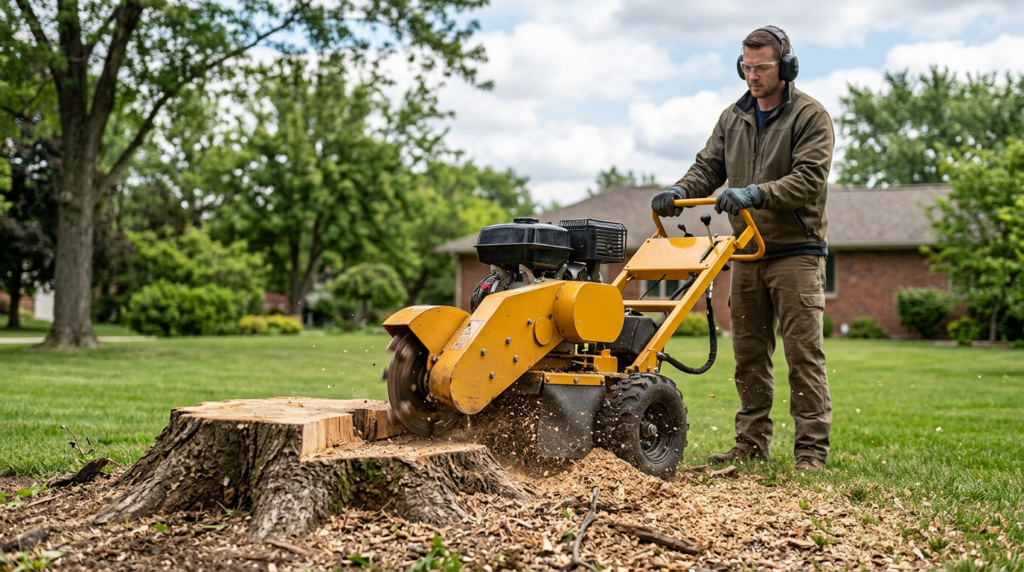
Quick answer: If you want the stump gone without weeks of digging, damaged tools, or a half-finished hole, professional stump grinding is usually the practical choice. A grinder can reduce the stump to below grade so you can replant grass or landscaping sooner. DIY removal can work for very small, shallow stumps, but it’s labor-heavy and risky around rocks, roots, and utilities.
What Stump Grinding Actually Does
Stump grinding uses a specialized machine to chew the wood down into chips, typically taking the stump several inches below the soil line so the area can be covered with topsoil and seed. It removes the visible stump and the immediate root flare, but it doesn’t pull every root out of the yard. Many roots often decay over time, but nuisance issues are more likely with shallow surface roots, species that sucker from roots (like some poplars and elms), or roots that were already lifting sidewalks or crowding plumbing.
Hiring professional stump grinding is mainly about speed, control, and avoiding collateral damage. The machine can be positioned to grind precisely where you need it, even when the stump is close to fences, patios, or other landscaping. You also get a cleaner finish than burning, chemical rot, or hacking it down with a saw.
After grinding, you’ll have a mound of wood chips mixed with soil. Many homeowners keep some chips as mulch and remove the rest, then add fresh soil because chips can settle as they break down.
When DIY Stump Removal Makes Sense (and When It Doesn’t)
DIY can be reasonable if the stump is small (think shrub-sized or a young tree), you can clearly access it from all sides, and you’re comfortable with heavy digging. Typical guidance is that DIY is only realistic under roughly 6–8 inches in diameter (measured across the stump) when you can expose the main roots with a shovel and cut them with a lopper/hand saw without fighting rocks. Once you get above about 10–12 inches, the root mass and leverage needed usually make grinding faster and safer for most homeowners.
DIY starts to go sideways when the stump is large, the tree had aggressive roots (many maples and elms do), or the stump sits near hardscaping. Hidden rocks can destroy chains, and thick roots can bind up saws. Burning can be unsafe and may be restricted locally. Chemical stump removers take time and don’t always work evenly, leaving you with a punky, messy stump for months.
If you’re on the fence, a typical rule of thumb is this: if you can’t dig around the stump and find the major roots within about 8–12 inches of depth without hitting something you care about, grinding is usually the cleaner route.
Safety and Site Issues Homeowners Miss
The biggest risk around stumps is what you can’t see. Buried utilities, irrigation lines, landscape lighting wire, and drainage pipe can run closer to the stump than you expect. Call for utility marking before any digging or grinding, and flag private lines if you know where they are.
Access matters, too. Many grinders need a certain gate width and stable ground to reach the stump. As typical guidance, if your narrowest access point is under about 36 inches, you may need a smaller machine or a different approach. Slopes, soft soil, and tight corners can change the plan. If the stump is near a foundation, retaining wall, or sidewalk, you’ll want a controlled approach so you don’t loosen soil that was supporting an edge.
Plan for debris. Grinding throws chips and small wood fragments. Clearing patio furniture, moving vehicles, and covering delicate plants can save you cleanup and broken items.
What to Do After the Stump Is Ground
Decide how you want to use the spot. For grass, remove excess chips, add a few inches of topsoil, and reseed or sod. For planting, avoid placing a new tree directly into the chip-heavy grind zone; the settling and decomposition can affect stability and soil consistency. Shifting the new planting a couple feet away is often easier.
Watch for settling over the next few months, especially after rain. It’s normal to top off the area once or twice as the chips break down. If you see persistent mushrooms, that usually means leftover wood is decomposing; it’s rarely a problem for turf, but you may want to rake and add soil if it stays soggy.
Before you call for help, collect a few details so you get accurate guidance: take clear photos from 4 angles; measure stump diameter at the widest point; note how far it is from fences, the house/foundation, sidewalks, and any HVAC units; measure the narrowest gate width and check for steps or tight turns; and mark any visible utilities, irrigation heads/lines, or low-voltage lighting near the stump. If you want a local pro to review that info and recommend an approach, White Oak Tree Company can help.