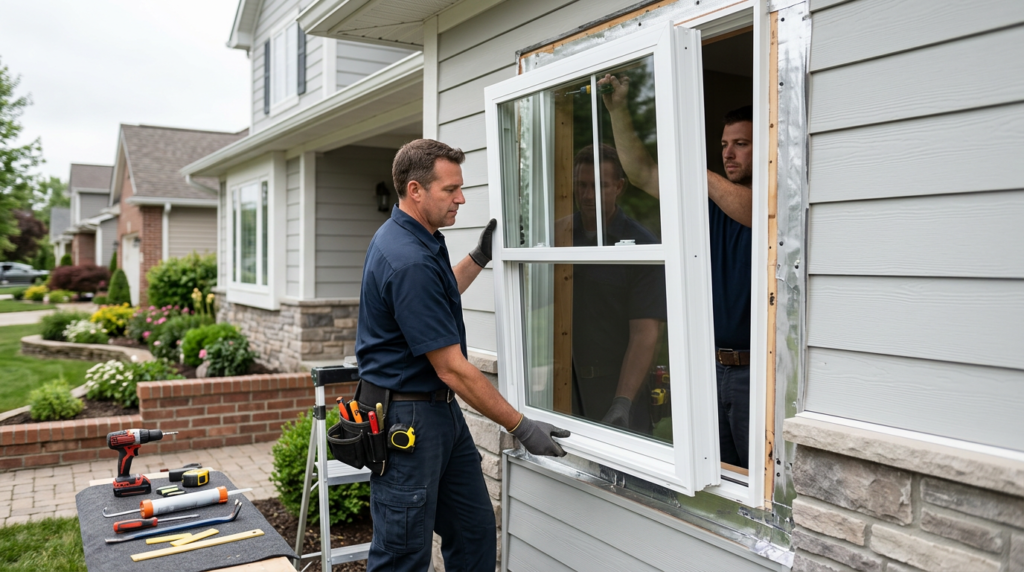
Quick answer: Choose a replacement window installer by confirming they measure each opening, explain window types that fit your home, and provide a written scope that covers removal, installation method, trim work, and cleanup. Ask how they handle water management (flashing, sill pan, and sealants), what warranty applies to both product and labor, and whether they’ll pull permits if required. Compare apples-to-apples quotes based on the same window specs.
What to Ask Before You Schedule an Estimate
Start by narrowing your search to installers who focus on replacement work, not just new construction. A good sign is an estimator who talks about installation details as much as the window brand—how they’ll protect the opening, manage water, and finish the interior and exterior trim. If you’re searching replacement window installers near me, have a short list of questions ready so each visit is comparable.
Ask what installation method they recommend for your situation: insert (pocket) replacement into an existing frame versus full-frame replacement down to the rough opening. Insert installs can be faster and less disruptive when the existing frame is square and sound, but they slightly reduce glass area and rely on the old frame being in good shape. Full-frame replacement is more invasive but can solve rot, out-of-square openings, and chronic leaks because it lets the installer rebuild the water-management layers correctly.
Also ask how the quote will specify the window itself. You want the exact series or model, glass package (double-pane vs. triple-pane, coatings, gas fill), grid style if any, and how openings will be trimmed. Vague descriptions make it hard to compare bids and easy to miss what you thought you were buying.
Red Flags That Lead to Drafts, Leaks, and Sticking Sashes
Most window complaints trace back to the install, not the glass. Watch for anyone who can’t clearly explain flashing strategy. Proper work typically includes a sloped sill or sill pan, flashing tape or equivalent at critical joints, and sealants used where they make sense—not as a substitute for flashing. If the plan sounds like “we just caulk it really well,” that’s a risk.
Pay attention to how they talk about squareness and shimming. A window installed out of square can bind, leave uneven gaps, and stress the frame over time. The installer should describe checking level, plumb, and square; using shims at structural points; and insulating the gap with low-expansion foam designed for windows and doors.
Inside, look for a plan to address the finish: will they reuse existing interior casing, replace it, or add new trim? Outside, ask how they’ll handle brickmold, aluminum wrap, or siding transitions. Poor exterior detailing can trap water behind trim and create hidden rot.
How to Compare Quotes Without Getting Burned
Ask each contractor to quote the same scope: same number of windows, same style (double-hung, casement, picture), and the same installation method. If one quote is much lower, check what’s missing—often disposal, trim work, upgraded glass, or full-frame labor.
Clarify what warranty you’re getting and who provides it. Manufacturers usually cover the window unit under specific conditions, while labor warranties vary by installer. Get both in writing. Also ask who handles service calls if a sash won’t lock, a balance fails, or condensation appears between panes.
Permits and code requirements vary by area and project type. A straightforward replacement sometimes doesn’t require a permit, but egress requirements, tempered glass in certain locations, and structural changes can trigger one. The installer should be able to explain what they’ll do if a permit is needed and how inspections will be handled.
If you want help sorting through options and getting a clear scope for your home, Georgia Home Windows is a local place to start.