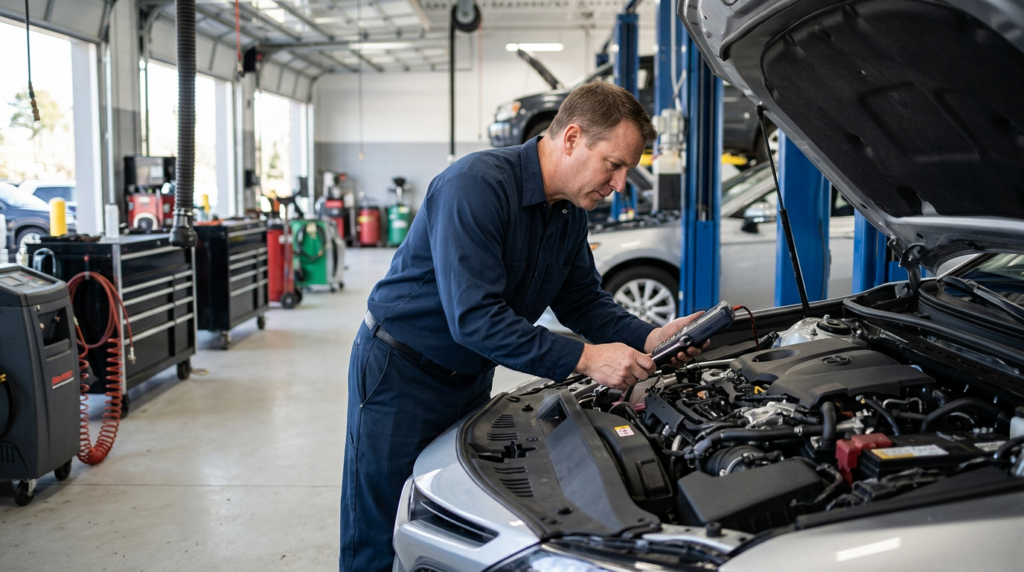
Quick answer: You can get full-service auto repair in Buford, GA at a shop that can handle routine maintenance, diagnostics, and major mechanical work under one roof. Look for a place that can inspect the whole vehicle, explain findings in plain language, prioritize safety items first, and back recommendations with test results—not guesses. A true full-service shop can also coordinate parts, warranties, and follow-up checks.
What “Full-Service” Should Mean for Your Car
Full-service auto repair usually means one shop can cover maintenance (oil changes, filters, fluid services), wear items (brakes, tires, batteries), diagnostics (check-engine light, electrical issues), and mechanical repairs (cooling system, suspension, steering, drivability problems). It should also include a complete inspection approach—catching problems that are related, like a coolant leak that caused overheating and then triggered a misfire.
A good way to confirm you’re booking the right kind of appointment is to see if the shop clearly offers diagnostics plus repair, not just parts replacement. If you’re searching for full service auto repair Buford GA, expect the shop to start with verification (road test or scan data), then pinpoint testing (smoke test for vacuum leaks, battery/charging tests, cooling system pressure test), and only then recommend parts and labor.
Full-service also means they can tell you what can wait. Example: a small seep at a valve cover gasket might be monitored, while a brake fluid leak or overheating concern should be treated as same-day safety/engine-protection work.
Common Repairs a Full-Service Shop Should Handle
Most drivers end up needing the same categories of work over time. A full-service shop should be comfortable with:
Brakes (pads/rotors, calipers, fluid flush), steering and suspension (ball joints, tie rods, struts), cooling system repairs (radiator, water pump, thermostat, hoses), engine performance issues (misfires, rough idle, stalling), and electrical/starting problems (battery, alternator, starter, parasitic draw testing). Many shops also handle A/C diagnostics and repair, including leak detection and component replacement.
Ask how they confirm the root cause. For example, “brakes grinding” might be worn pads, but it can also be a seized caliper slide pin or a wheel bearing issue. “Car won’t start” can be battery-related, but it can also be a bad ground, starter signal problem, or immobilizer/key issue. The right shop explains the test path, not just the final part.
How to Choose the Right Shop in Buford
Start with communication and process. You want written estimates, clear priority levels (safety now vs. maintenance soon), and an explanation you can repeat back. If you’re told you need multiple repairs, ask which symptom each repair addresses and what would happen if you delay it.
Pay attention to how they handle diagnostics. A check-engine light should come with actual findings—codes, scan data, or measured results—plus a plan. If they jump straight to “replace the sensor,” that’s a red flag unless the test results truly point there. Also ask about parts options (OEM-equivalent vs. premium) and what warranty coverage applies to parts and labor.
Finally, consider convenience items that affect real life: appointment availability, drop-off/pick-up routines, and whether they’ll recheck a repair if the same symptom returns shortly after. Team Ryan Automotive is a solid local place to get help and have the work explained clearly.