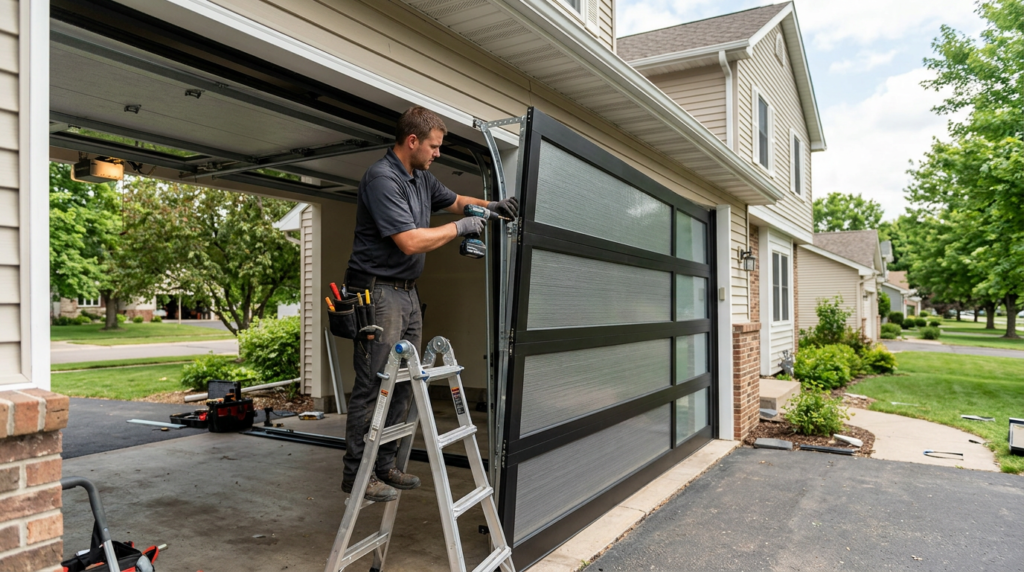
Quick answer: Most homeowners need a repair, not a full replacement, when the issue is limited to springs, cables, rollers, sensors, or the opener and the door panels are still straight. Replacement makes more sense when the door has structural damage (bent sections, rot, delamination) or keeps failing again after recent fixes. A technician can confirm door balance, track alignment, and safety-system performance to choose the safest long-term option.
Quick Clues It’s a Repair
Many garage doors that won’t open are caused by a handful of common components: springs, cables, rollers, photo-eye sensors, or the opener’s settings. If the door sections are straight, the panels line up cleanly, and the tracks aren’t twisted or torn from the wall, a targeted repair usually restores smooth, safe operation.
Watch for symptoms that point to a specific fix: a loud bang and a suddenly heavy door often means a spring snapped; a door that rises crooked or binds can indicate a cable issue or a roller off the track; grinding or squealing can come from dry or worn rollers/hinges; and a door that reverses for “no reason” often traces back to dirty or misaligned safety sensors. If you’re searching for residential garage door repair Hudson WI, describing these exact symptoms helps narrow down what needs attention.
One safety rule: if a spring or cable is suspect, stop using the door and don’t try to “help” it with the opener. Springs store enough force to cause serious injury, and an opener can burn out if it’s lifting an unbalanced door.
Repair vs. Replace: A Simple Decision Rubric
Repair is usually the right call if: the panels are straight and solid, the tracks are firmly mounted, and the problem appears limited to one or two wear components (like a spring, cable, roller set, sensor alignment, or an opener adjustment).
Replacement is usually the smarter move if: you see structural damage (deep creases, cracked framing, sagging sections), wood rot at the bottom, delamination, or the door has had repeated failures again and again after recent repairs. Replacement can also be a better value if impact damage has pulled the opening out of square and alignment problems keep returning.
Neutral tie-breaker: if you can’t get the door to move smoothly by hand (with the opener disconnected) and the panels/tracks look questionable, have it inspected before approving piecemeal parts. A balance and alignment check often reveals whether you’re fixing the cause or just the symptom.
What a Good Repair Visit Should Include
A solid diagnostic checks the whole system, not just the obvious failed part. That usually includes verifying spring size and balance (the door should stay near mid-travel when disconnected from the opener), inspecting cables and bottom brackets, checking roller wear, confirming track plumb/level, tightening hinges and fasteners, and testing the opener’s force and travel limits.
Expect safety checks too: photo-eyes should be aligned and mounted at the same height, the door should reverse when it contacts a 2×4 laid flat under the door, and the manual release should work smoothly. If any of those tests fail, the door can be hazardous even if it “opens.”
In regions like Hudson, WI, cold snaps can make older grease stiffen and weather seals less flexible, which may increase noise or resistance. Seasonal tune-ups typically focus on appropriate lubrication for moving parts (not the tracks) and checking the bottom seal and perimeter stops for gaps that let in wind and moisture.
What You Can Safely Check Now (and When to Stop)
Safe homeowner checks: make sure nothing is blocking the photo-eyes (wipe the lenses and confirm both sensor lights look normal), clear any debris from the track area, and look along the tracks for obvious bends or a loose mounting bracket. With the door closed, do a visual scan for cable fraying near the bottom corners and listen for unusual grinding when the opener tries to run (then stop).
Stop and call a pro if you see: a visible gap in a torsion spring (above the door), a hanging or slack cable, a roller that has come out of the track, a door that’s stuck crooked, or a door that feels extremely heavy when you try to lift it manually after pulling the emergency release. Those conditions can turn into a drop or pinch hazard quickly.
If you want a clear recommendation tailored to your door’s condition, AA Garage Door is a local place to get help.