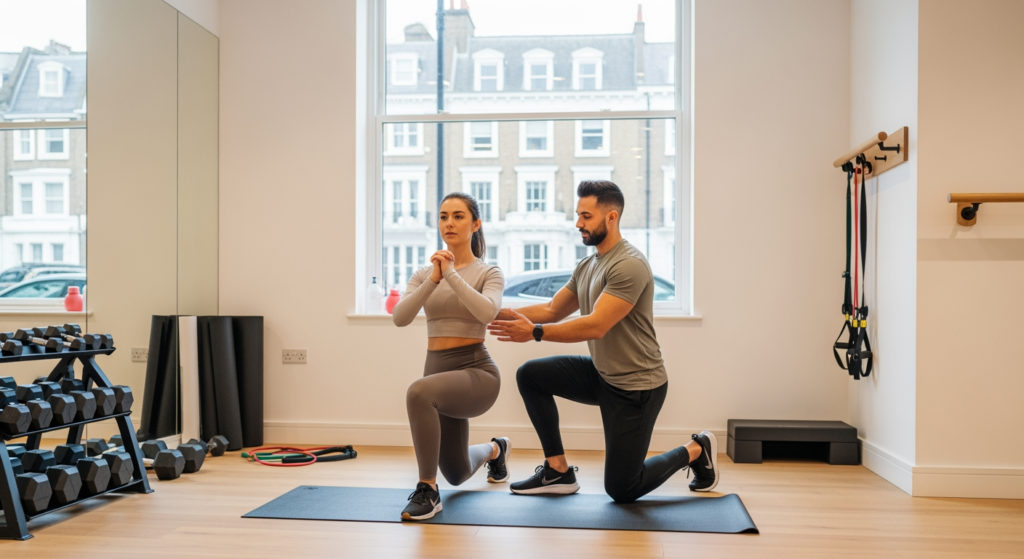
When you want real progress without guesswork, Personal Training Islington is a practical, local way to get tailored coaching that fits your schedule and goals. For clear, evidence-backed advice about how much activity adults need and the health benefits of regular exercise I refer to the NHS homepage for guidance and recommendations NHS.
Why choose a local personal trainer in Islington
Living in Islington means access to parks, canals, busy high streets, and a fast pace of life that can make fitting fitness into your week a challenge. A local personal trainer knows the area and designs workouts around your routine, whether you prefer sessions near Upper Street, by the Regent’s Canal, or in a private studio. I find that trainers who live and work in the borough give practical options that blend mobility, strength, and real-life movement so training sticks when weeks get busy.
What a typical program looks like
Most effective programs I’ve written combine three elements: movement assessment, progressive strength work, and habit coaching. In the first session a trainer will usually assess mobility, posture, breathing, and baseline strength to build a safe starting point. From there, the plan evolves every 2–4 weeks so you avoid plateaus and keep momentum.
A balanced program in this area typically includes resistance training twice a week to build muscle and preserve bone health, 20–30 minutes of higher intensity work once a week for cardiovascular fitness, and daily movement or mobility practices. This mix fits into busy schedules and aligns with practical goals like climbing stairs without getting breathless, improving desk posture, or preparing for weekend sport.
Local benefits you get from in-person sessions
Training face to face in the city offers benefits that remote programs can’t match. Trainers can correct technique on the spot, adjust load safely, and use the local environment—from canal towpaths for running drills to parks for circuit work—to keep sessions fresh. I’ve seen clients improve faster when they train where they live, because it takes away friction. Every extra minute saved on travel is a minute used for better recovery or sleep.
Typical outcomes in 8 to 12 weeks
With commitment, most people notice these changes in two to three months: improved stamina on daily walks, clearer posture at the desk, increased strength for everyday tasks, and a stronger sense of routine. These wins often lead to better sleep, improved mood, and more consistent healthy choices. Trainers in the area often combine measurable checkpoints—like strength testing or timed circuits—so you can see progress numerically and feel it in daily life.
Trends shaping personal training in 2026
The fitness world evolves fast, and a few trends are particularly relevant for local training in Islington. First, hybrid coaching that blends in-person sessions with short online check-ins has become mainstream. It gives you hands-on technique work when you meet your trainer, plus accountability during the week. Second, wearables and simple data tracking make weekly adjustments smarter. Trainers now use step counts, heart rate zones, and sleep patterns to individualize programs.
Finally, recovery-focused training is getting more attention. That means programs include mobility, breathwork, and planned rest to reduce injury risk and improve long-term consistency. These trends make training more efficient and kinder to the body while keeping results steady.
Common pain points I help clients solve
People come to trainers with a few recurring frustrations: not knowing where to start, hitting plateaus, inconsistent motivation, and balancing work with training. I work with clients to remove barriers by creating simple systems—short, effective workouts, clear home exercises, and a focus on habits rather than perfect routines. This reduces overwhelm and turns fitness into something manageable and repeatable.
Actionable steps to get started this week
- Identify one clear, motivating goal that matters to you, such as walking your neighbourhood without breathlessness or fitting into a favourite jacket.
- Book a 45–60 minute in-person assessment so your trainer can test movement and set safe starting loads.
- Commit to three short practices each week that support the goal—two guided sessions and one self-led mobility routine for recovery.
- Use simple tracking like a calendar or a phone reminder to log consistency rather than perfection.
How sessions are tailored for Islington lifestyles
Islington residents often juggle commuting, irregular working hours, and family commitments. Programs I design reflect that reality: sessions are compact and efficient, often focusing on multi-joint movements that deliver the most benefit in the shortest time. For busy clients, we prioritize exercises that transfer to everyday life—squats for lifting shopping bags, unilateral work for balance, and core conditioning for sitting posture. Trainers also factor in seasonal changes, using indoor studio work in winter and canal or park sessions in summer to keep variety high.
Nutrition and recovery basics that actually help
Fitness isn’t only what happens in a session. Nutrition and recovery determine how quickly your body adapts. I keep recommendations practical—small, sustainable shifts rather than strict dieting. A few examples: increase protein at meals to support muscle repair, aim for regular meals that match training times, and prioritize sleep because it underpins recovery and appetite regulation. Recovery strategies like short mobility routines after long desk days and active rest days (easy walks or gentle yoga) help maintain consistency and reduce injury risk.
Simple recovery checklist to use after intense sessions
- Rehydrate and eat a balanced snack with protein within an hour of training.
- Spend 5–10 minutes on mobility drills to improve range of motion for the following day.
- Aim for consistent sleep windows and avoid heavy screens in the hour before bed.
- Use active recovery days to keep blood flow without taxing the nervous system.
What to expect from pricing and packages in the area
Personal training prices in Islington vary by trainer experience, session length, and whether training happens in a private studio or outdoors. Most places offer 1:1 coaching, small group sessions for a lower hourly rate, and online or hybrid packages. I always recommend asking about package savings, drop-in policies, and how progress is measured. A transparent trainer will outline session goals, show how they track improvements, and give realistic timeframes for expected results.
How to pick the right trainer for you
Finding a trainer who fits your style is key. Look for these signals: clear communication about the first assessment, a progressive plan that changes over time, client storytelling that sounds realistic, and certification or ongoing education in strength and conditioning or corrective exercise. Personality matters as much as technique—pick someone who motivates you without making the plan feel unsustainable.
Frequently asked questions
Below I answer common questions I hear from people in the borough so you can head into your first session with confidence.
How often should I train with a personal trainer? Twice a week is a strong starting point for most people. It balances progress with recovery and fits into busy schedules. If you can only commit to once a week, pair it with self-guided sessions to maintain progress.
Can I train outside if it rains or gets cold? Yes. Trainers in the area adapt programs for weather—indoor spaces or sheltered canal-side points make outdoor work possible most of the year. Studios also offer small group classes when outdoor conditions aren’t suitable.
Is personal training only for people who want to bulk up? Not at all. Personal training helps a wide range of goals: weight management, injury prevention, improving mobility, preparing for a specific event, or simply building a steady routine. Trainers tailor intensity and focus to your objectives.
Next steps to get started
If you’re ready to make change easier, the best next step is a short consultation. Ask about the initial assessment, how progress is tracked, and what flexibility exists around session times. A good trainer will help you set a realistic start and remove obstacles so training becomes part of your normal week rather than another task on your list.
I’ve worked with people across the city and seen how consistent, small actions stack into big changes. If you want training that understands local life and gives you practical tools, consider booking a consult to discuss your goals and the realistic steps we can take together.
When you’re ready to take that step, learn more from KB Personal Training and find a plan that fits life in Islington. I’ve found their options balance hands-on coaching with flexible choices so you get measurable results without stress.