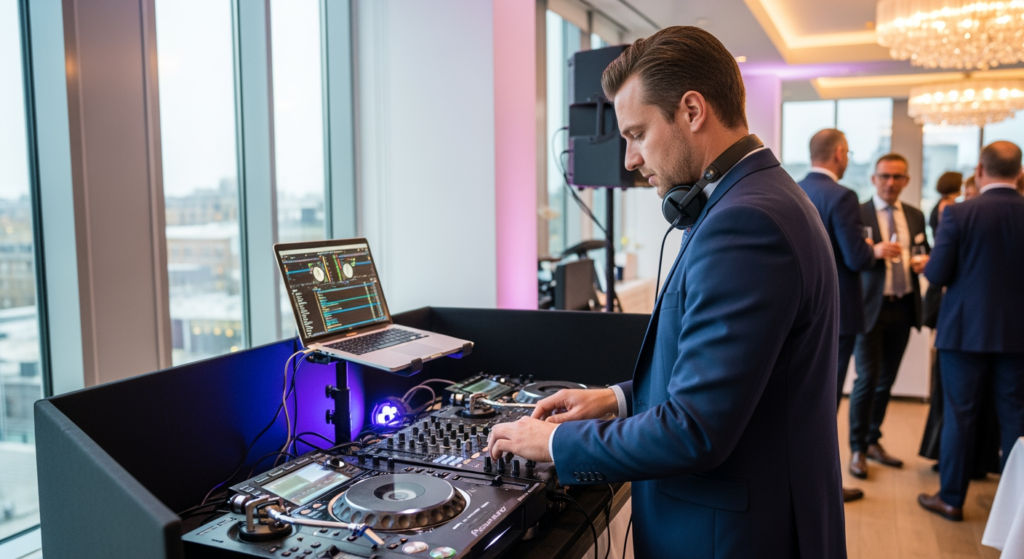
I often hear the same question from event planners: how do you find the right Corporate event DJ who can read a room, lift a crowd, and keep everything on schedule? Whether you’re coordinating a boardroom launch, a rooftop networking night in London, UK, or a formal awards dinner near Canary Wharf, the DJ you hire will shape the mood. The Office for National Statistics highlights how in-person corporate gatherings are bouncing back, so it pays to get the entertainment right (ONS).
Why this guide matters
I wrote this guide for busy professionals who need practical, step-by-step advice. I’ll walk you through everything from the initial brief to the post-event wrap-up. You’ll learn what questions to ask, what tech to insist on, and how to get great music without surprises on the night. If you plan events in London neighborhoods like Shoreditch, Southbank, or Mayfair, these tips will help you secure a polished performance that fits your company culture and budget.
What a corporate event DJ actually does
A corporate event DJ does more than play tracks. In my experience, the best DJs manage timelines, adapt playlists to changing energy, handle announcements with clear audio, and coordinate with venue staff. For conferences they might provide background music between sessions. For dinners they create a soundtrack that supports conversation. For evening parties they build momentum and close the night on a high note. Hiring a DJ who understands corporate tone is key — you want someone comfortable with both a formal awards dinner and a lively afterparty.
4 signs you’ve found a professional you can trust
When I vet DJs for events, I look for these clear signals of professionalism:
- Clear written contract with scope, arrival time, setup needs, and cancellation terms.
- Proven experience with similar corporate events and venues in the city.
- Professional-grade kit and backup equipment for sound and power.
- Strong communication: timely replies, a good brief review, and willingness to adapt.
How to write a precise brief
A short, clear brief saves time and reduces risk. I recommend including these elements when you send an inquiry:
- Type of event (conference, launch, awards, staff party) and expected number of guests.
- Venue name, exact load-in time, and any stage or PA constraints.
- Desired vibe and examples of music or artists to steer clear of.
- Technical requirements: mic for speeches, DJ set length, and whether streaming or recording will happen.
With these details the DJ can confirm availability, outline tech needs, and give a realistic quote. A good DJ will always ask follow-up questions — that’s a sign they care about outcomes, not just playlisting.
Questions you must ask before you hire
In my work, a short vetting call reveals a lot. Ask these questions to avoid common issues:
Are you insured and do you carry public liability?
Venues will often ask for proof of insurance. A pro DJ will supply this quickly.
Do you bring backup equipment?
Failures happen. Confirm there’s a redundant laptop, mixer, and cables. I prefer DJs who travel with a secondary sound source and a spare microphone.
What’s your plan for announcements and speeches?
Microphone handoffs and speech cues should be rehearsed. If your event includes presentations, make sure the DJ coordinates with AV and the MC ahead of time.
Can you provide references or recent client examples?
Ask for short clips or links to recent corporate sets. Listening confirms taste and style more than any resume line.
Technical checklist for flawless sound
Sound issues are the fastest way to derail a corporate event. Use this checklist to make sure the basics are covered:
- Confirm the venue’s power outlets and whether you need extension leads or stage boxes.
- Ask the DJ for a stage plan showing speaker placement and cable runs to avoid trip hazards.
- Verify whether venue PA will be used or if the DJ brings their own system for consistent coverage.
- Plan sound checks well before doors open, and schedule a final run-through with speakers and MCs.
Music programming: building a smart playlist
Good programming balances energy and appropriateness. For daytime conferences, choose instrumental or low-key electronic tracks during breaks. For networking drinks, pick modern soulful grooves that encourage conversation. For the main party, map the night with a clear arc: warm-up, build, peak, and cool-down. I advise creating a short “do not play” list for anything that could offend or distract, and share it with your DJ. Also discuss a few “must play” tracks so there are guaranteed moments that resonate with your guests.
Working the room: real-time DJ skills that matter
The best DJs don’t just follow a playlist; they read the room. Watch for energy dips and be ready to shift tempo. If attendees are clustered and chatting, drop the volume and pick a groove that supports conversation. If people migrate to the dance floor, bring in familiar hooks to keep them there. A skilled DJ also uses transitions and quick edits to keep momentum without jarring the audience. I always prefer DJs who can mix live elements with pre-planned cues for speeches or awards.
Managing event logistics and compliance
Corporate planners must think beyond music. Confirm noise curfews and licensing rules with the venue. If you’re in London, some boroughs have strict sound limits and late-night restrictions. Ask the venue about temporary event notices and the required permits for amplified sound. Also check whether you need separate insurance for live streaming or recording. Handling these details early avoids last-minute shutdowns and unexpected fines.
Trends shaping corporate event entertainment
Two trends I keep recommending to clients are hybrid-friendly setups and sustainability. Hybrid events now require a DJ who can play both for the live audience and a remote stream. That means clean audio feeds and close coordination with AV teams. Sustainability is becoming a decision factor too — from low-energy equipment choices to reusable decor. Silent discos are also on the rise for venues with noise limits: attendees wear headphones and can switch channels between DJ mixes and live speakers. These trends let you host more flexible and inclusive events in any neighborhood.
Budgeting: what to expect to pay
Fees vary by city, experience, and scope. In central London, expect to pay more for DJs who bring high-end kit and mixing skills suited to corporate audiences. When you compare quotes, look at the complete package: travel, setup, mic handling, and any overtime fees. Sometimes a slightly higher fee buys reliability and peace of mind — which matters more than squeezing a few pounds off the bottom line if your event is high profile.
How to work with your DJ on the day
Clear roles create smooth shows. Appoint one point person from your team to liaise with the DJ. Give them the final itinerary with exact timings for speeches, awards, and breaks. Share contact details for venue staff and the AV lead. Allow the DJ time for a proper sound check and a quick briefing with any MCs or presenters. I recommend a short pre-event huddle 30 minutes before doors open to confirm cues and any last-minute changes.
Measuring success after the event
After the event, gather feedback that’s specific and useful. Ask whether the music supported the brief, whether volumes were appropriate, and whether announcements were clear. If you used streaming, check audio quality on the recording. Compile this feedback and share it with the DJ — constructive notes help them improve and make future collaboration smoother. Positive feedback also helps you build a trusted vendor list for future events.
Quick troubleshooting tips
If something goes wrong, stay calm and communicate. Here are a few quick fixes I’ve successfully used:
- If the mic hums, check the ground loop and switch to a different channel or battery-powered mic.
- If the music volume is too loud for conversation, ask the DJ to lower bass frequencies and reduce clipping by 2–3 dB.
- If an important track is missing, have the DJ crossfade to a similar tempo track rather than a sudden stop.
- If internet streaming degrades, record locally and provide a clean file to remote attendees afterward.
Making the most of your entertainment investment
A corporate event DJ can be one of the most cost-effective ways to elevate your company gathering. Treat the booking like any other critical vendor: set clear expectations, give a detailed brief, and allow time for a proper sound check. When you do, the DJ becomes a partner who helps achieve your goals — whether that’s boosting networking, showcasing brand personality, or creating a memorable night for staff and clients.
When you’re ready to hire, look for someone who understands the tone you want, brings reliable equipment, and communicates clearly. If you plan events regularly in the city, build a roster of DJs who know local venues and compliance rules — they’ll save you time and reduce last-minute stress.
If you want a tailored run sheet, a simple sound checklist, or someone who can advise on hybrid audio feeds and sustainable kit, I’m happy to help you prepare the right brief and questions for interviews. When the brief is tight and expectations are clear, the entertainment always delivers.
For a reliable partner that understands corporate needs in London and the surrounding area, consider contacting Spin Sisters to discuss your event.